Spray Foam Diagnosis
Spray Foam Mold & Moisture Signs
What actually indicates moisture trapped behind spray foam versus a surface-level, non-structural issue — and why the difference matters.
Mold is the scariest word in any spray foam problem search, and it's also one of the most frequently misunderstood — because mold behind spray foam is not a routine outcome, and when it does happen, the mechanism is specific and identifiable rather than a mysterious property of the material itself.
How Mold Actually Gets Behind Spray Foam
Closed-cell spray foam becomes a Class II vapor retarder at roughly 1.5 inches of thickness or more — meaning it substantially blocks water vapor from passing through it at that thickness. If foam is applied over a substrate (roof sheathing, wall framing) that already has elevated moisture content — from a pre-existing leak, condensation, or the wood simply not being dry enough at the time of application — that moisture gets sealed in behind the foam with nowhere to go and no way to dry out. That trapped moisture, not the foam itself, is what creates conditions for mold.
What This Means for Diagnosis
Mold behind spray foam is essentially always a substrate-moisture problem at the time of installation, or a design mismatch (the wrong vapor-permeability product for that climate and assembly), not a property of the foam reacting badly on its own. This matters for diagnosis because it means the relevant question isn't "can spray foam cause mold" in the abstract — it's whether there's evidence the substrate was wet before or during installation, or whether moisture has been getting in since (a roof leak, plumbing issue, or condensation source).
Visible and Indirect Signs to Look For
Direct signs include visible dark staining or discoloration at foam edges or seams, a musty smell distinct from the chemical cure odor, or visible moisture beading on any exposed surface near the foam. Indirect signs are just as important: any known history of roof leaks, plumbing issues, or condensation problems in that area before or since the foam was installed raises the likelihood that moisture is the underlying issue, even without visible mold yet.
Why This Usually Can't Be Confirmed by Looking Alone
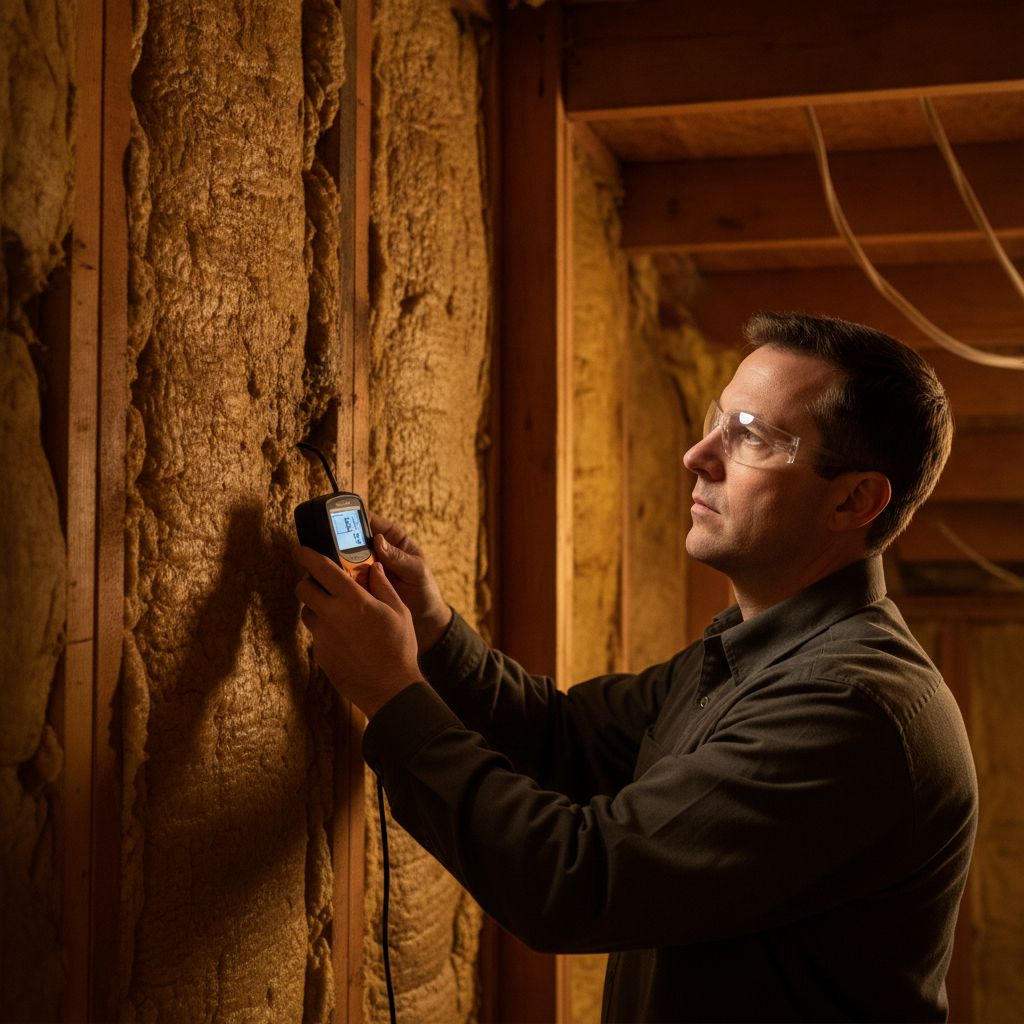
Because closed-cell foam blocks visual inspection of the substrate behind it — that's part of why spray foam raises real estate and insurance concerns generally — confirming an actual moisture or mold problem behind the foam typically requires either a moisture meter reading through the foam (a real, standard diagnostic technique) or, in some cases, a small inspection cut to directly examine a suspect area. A visual inspection alone can rule some things in (visible surface staining) but can't reliably rule a hidden problem out.
Key Takeaways
- Mold behind spray foam is a substrate-moisture problem — foam applied over wood that was already wet, or the wrong vapor-permeability product for the climate — not a routine outcome of the material itself.
- The real diagnostic question is whether there's evidence of pre-existing or ongoing moisture, not whether spray foam "can" cause mold in the abstract.
- Visible staining, musty smell distinct from cure odor, and any history of leaks or condensation in that area are the practical signs to look for.
- Because closed-cell foam blocks visual access to the substrate, a moisture meter reading or inspection cut is often the only way to confirm what a visual look alone can't rule out.
Common Questions
Mold & Moisture FAQs
Real questions people ask when they suspect a spray foam problem.
Related Topics
Is Your Spray Foam Actually a Problem, or Normal?
How to tell a genuine spray foam defect apart from normal cure smell, texture variation, and other things that look alarming but aren't.
Read moreSpray Foam Off-Gassing & Persistent Odor
The real timeline for normal cure odor, and the specific signs that a smell lasting well past that window means something actually went wrong.
Read moreWhy Removal — Not Patch Repair — Is Usually the Real Fix
What federal spray foam litigation has established about how bad installations actually get remedied, stated honestly instead of oversold as an easy patch job.
Read more
Not Sure What You're Dealing With?
Get a free, honest second opinion on your spray foam situation — no pressure, no obligation, and no incentive to tell you it's worse than it is.