Spray Foam Diagnosis
Is Your Spray Foam Actually a Problem, or Normal?
How to tell a genuine spray foam defect apart from normal cure smell, texture variation, and other things that look alarming but aren't.
Spray foam has a genuinely wide range of normal appearance and behavior — color variation, surface texture, and minor irregularity are expected, not evidence something went wrong. But real defects do happen, and telling the two apart before you panic (or before you ignore something that actually matters) is the whole point of this page.
Normal Variation You Don't Need to Worry About
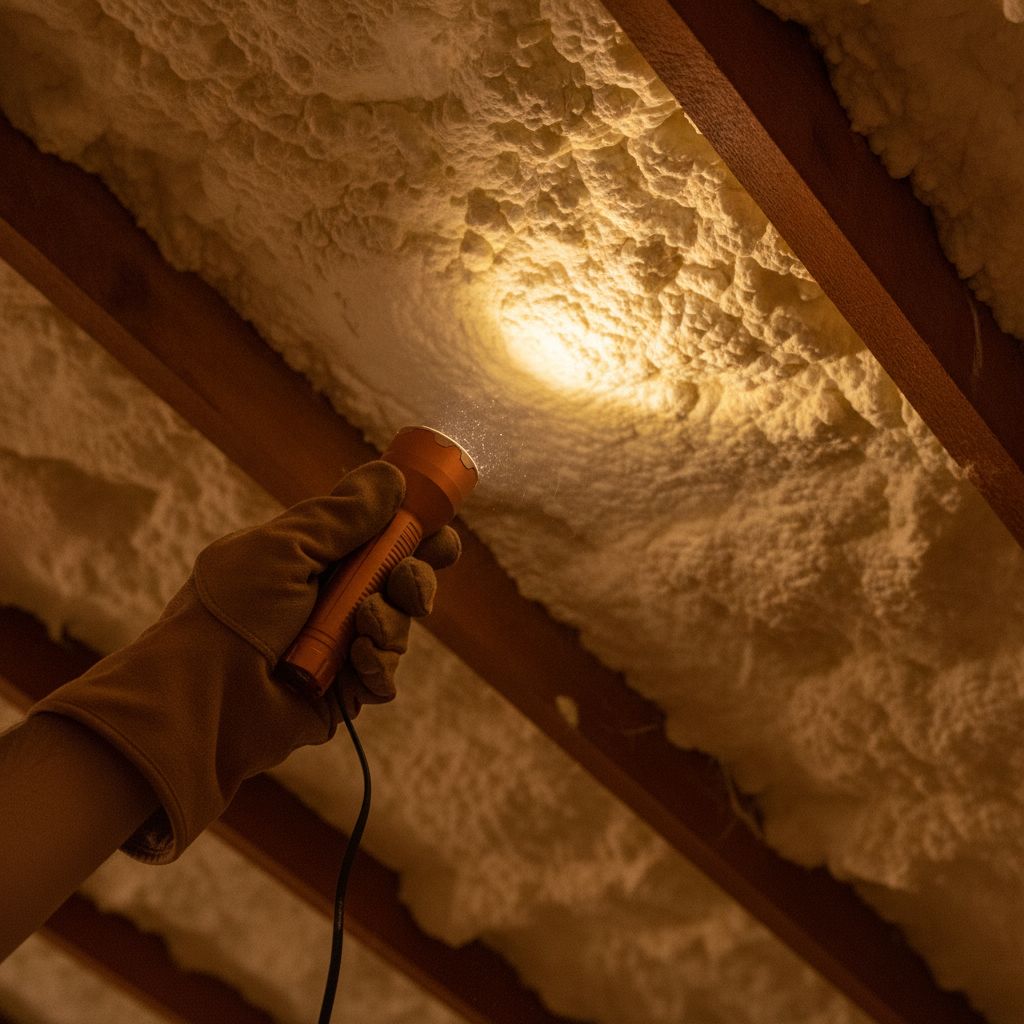
Spray foam's surface texture is naturally uneven — a slightly "orange peel" or rippled finish is normal, not a sign of poor application, since foam expands and skins over as it cures rather than self-leveling like paint. Color can vary slightly batch to batch and even within a single job as ambient temperature shifts during application; this is cosmetic, not structural.
A mild chemical odor for roughly the first 24-72 hours after application is also normal — that's the tail end of the curing reaction finishing off-gassing, and manufacturers specify this window explicitly as part of correct application.
The Real Warning Signs
Foam that has visibly shrunk and pulled away from the studs, rafters, or roof deck it was sprayed against is a genuine defect — correctly cured foam adheres and stays adhered; gaps forming after the fact point to an off-ratio mix or a substrate that wasn't properly prepped. Foam that stays soft, tacky, or spongy well past the cure window (rather than firm and stable) is another concrete sign, not a subjective impression.
A strong or acrid odor that persists for weeks rather than days, especially one that gets stronger in heat or humidity, is a real signal — it usually means the chemical reaction didn't fully complete, leaving unreacted or partially reacted material still off-gassing.
Why This Distinction Actually Matters
Treating normal characteristics as a crisis leads people to spend money on unnecessary inspections or removal for foam that's actually performing fine. Dismissing real warning signs as "probably nothing" lets an actual problem — trapped moisture, ongoing off-gassing, structural adhesion failure — get worse and more expensive to fix the longer it goes unaddressed. Getting the diagnosis right first is what determines whether you need to do anything at all.
When to Actually Get Someone to Look at It
If you're seeing visible shrinkage or gapping, persistent tackiness past the cure window, an odor that hasn't faded after a week or more, or any sign of moisture or discoloration near the foam, that's worth a real second opinion — not because it's automatically a disaster, but because those specific signs don't self-resolve and are worth understanding before they're your problem to explain to a future buyer or insurer.
Key Takeaways
- Uneven texture and minor color variation are normal — spray foam doesn't self-level and naturally varies batch to batch.
- A mild odor for the first 24-72 hours is expected cure off-gassing, not a defect.
- Real warning signs are concrete and specific: visible shrinkage/gapping, persistent tackiness, or an odor lasting weeks rather than days.
- Getting the diagnosis right first prevents both unnecessary spending on fine foam and letting a real problem get worse unaddressed.
Common Questions
Problem or Normal? FAQs
Real questions people ask when they suspect a spray foam problem.
Related Topics
Spray Foam Off-Gassing & Persistent Odor
The real timeline for normal cure odor, and the specific signs that a smell lasting well past that window means something actually went wrong.
Read moreSpray Foam Mold & Moisture Signs
What actually indicates moisture trapped behind spray foam versus a surface-level, non-structural issue — and why the difference matters.
Read moreWhy Removal — Not Patch Repair — Is Usually the Real Fix
What federal spray foam litigation has established about how bad installations actually get remedied, stated honestly instead of oversold as an easy patch job.
Read more
Not Sure What You're Dealing With?
Get a free, honest second opinion on your spray foam situation — no pressure, no obligation, and no incentive to tell you it's worse than it is.