Spray Foam Delamination: What It Looks Like and Why It Happens
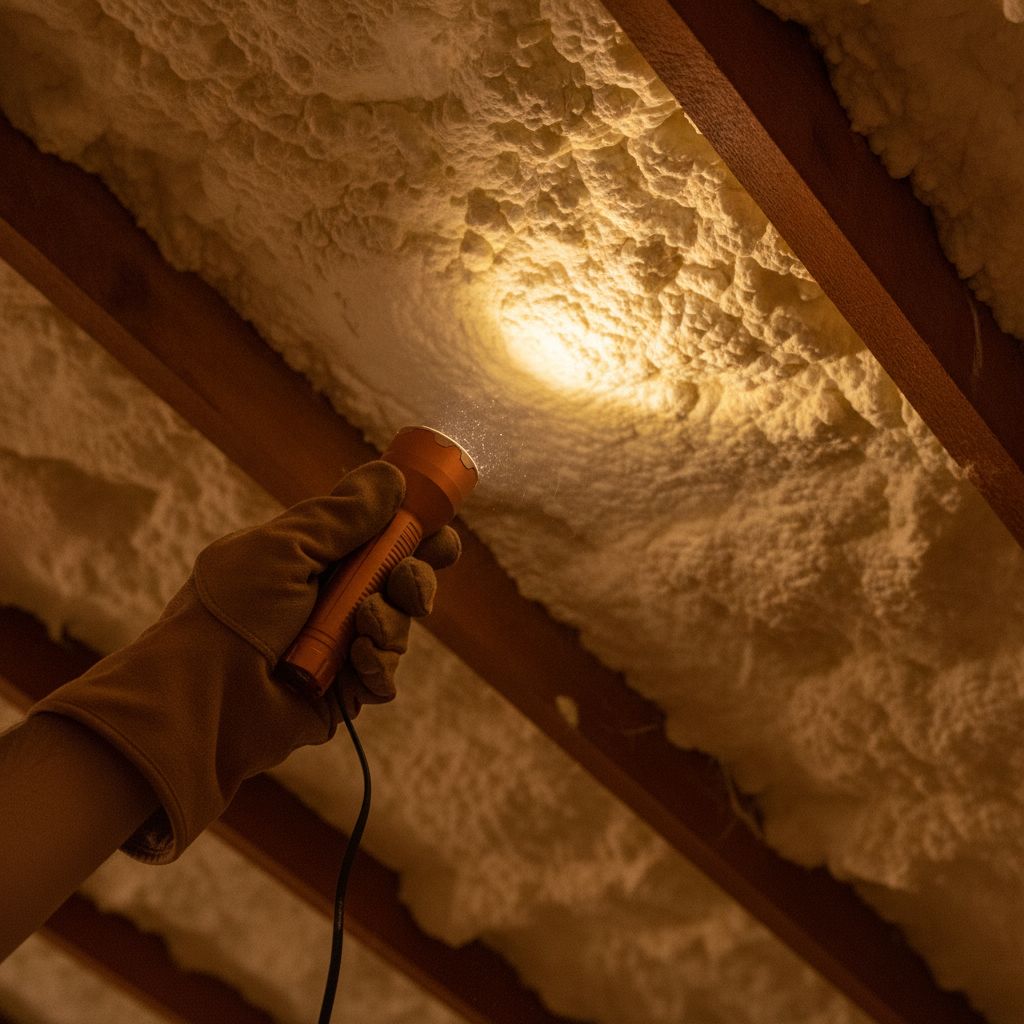
Of all the potential spray foam problems, delamination is one of the most visually unambiguous — foam is either still adhered to what it was sprayed against, or it isn't. Understanding why it happens helps make sense of what you're looking at and what it means for the rest of the installation.
What Delamination Actually Looks Like
Correctly cured spray foam adheres directly and permanently to the substrate it's applied to — framing, roof decking, subfloor. Delamination shows up as a visible gap between the foam and that surface, sometimes at the edges of a section, sometimes across a broader area. It can be a hairline separation you'd only notice looking closely, or in more severe cases, foam that's visibly sagging or pulling away enough to see daylight or the framing behind it.
Why It Happens: Shrinkage From Off-Ratio Curing
The primary mechanism behind delamination is shrinkage from off-ratio mixing. When spray foam is isocyanate-rich ("A-rich" — excess of the A-side component relative to the resin), it tends to cure brittle and friable, and to shrink measurably as it fully cures over the following days and weeks. That shrinkage is what physically pulls the foam away from the substrate it initially adhered to — the bond doesn't necessarily fail outright, the material itself contracts enough to create a gap.
Why It Doesn't Show Up Immediately
This is part of why delamination can be confusing to diagnose — it often isn't visible right after installation, because the shrinkage happens gradually as the off-ratio foam continues curing over subsequent days or weeks. A homeowner who checked their attic right after the job and saw solid, adhered foam might check again a month later and see gaps that genuinely weren't there initially. This is a real, documented characteristic of off-ratio cure chemistry, not a sign the foam degraded on its own after a fine installation.
What Delamination Means for the Rest of the Job
Delamination in one visible area is a meaningful signal about the installation as a whole — since it points to an off-ratio mixing problem, and off-ratio mixing during application usually isn't confined to one specific spot. If you see clear delamination in an accessible area, it's reasonable to treat that as evidence the broader installation may share the same underlying ratio problem, even in areas you can't easily inspect visually.
What This Means for a Fix
Because delamination stems from a chemical shrinkage problem in the cured material itself, re-adhering the existing shrunken foam isn't really possible — the material has already changed structurally. This is one of the clearer cases where, as covered in more depth on our removal-vs-repair page, the practical fix is removing the affected material and reinstalling correctly, not attempting to reattach or patch around the gap.
Read the full removal-vs-repair reality, or get a second opinion if you're seeing signs of delamination.