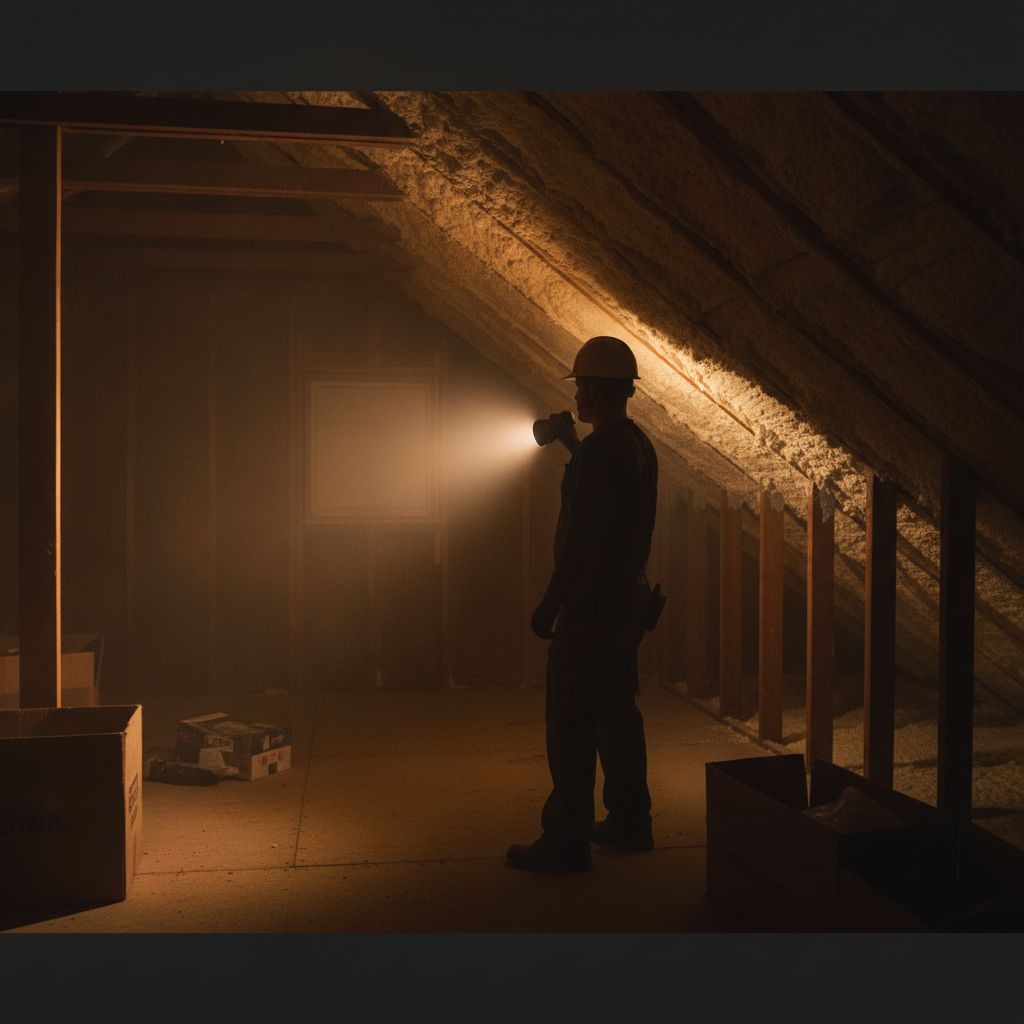
Off-Gassing vs. Normal Cure Smell: The Real Difference

"Does spray foam smell bad?" is one of the most common searches related to spray foam problems, and the honest answer is: briefly, yes, and that's normal — but the difference between normal and abnormal is more specific than most explanations give credit for.
The Reaction Behind the Smell
Spray polyurethane foam cures through a chemical reaction between an isocyanate component (almost always MDI) and a resin blend of polyols, catalysts, and blowing agent. That reaction doesn't finish instantly when the foam is sprayed — it continues completing over the following hours, and some odor during that window is a direct, expected byproduct of the chemistry finishing its job. This is exactly why manufacturers specify a re-entry time, commonly around 24 hours, before people should be back in the space regularly.
Where Normal Off-Gassing Actually Ends
For a correctly mixed, correctly applied job, that off-gassing should be noticeably fading within a few days and largely resolved within one to two weeks for most residential applications, faster in well-ventilated spaces. This isn't a vague impression — it tracks the reaction genuinely reaching completion, at which point there's very little left to off-gas.
What Off-Ratio Mixing Does Differently
When the proportioner delivers the two chemical components in an uneven ratio — commonly from equipment miscalibration, a clogged filter, or ambient temperature effects on component viscosity — the reaction doesn't complete the same way. Resin-rich ("B-rich") off-ratio foam in particular tends to cure soft and tacky, with excess amine catalysts and unreacted resin components that never fully polymerize. That unreacted material keeps off-gassing well past the normal window, because chemically, the reaction genuinely never finished.
The Practical Test
If you're trying to figure out which situation you're in: normal cure smell fades steadily and predictably over days. An off-ratio odor problem tends to plateau rather than fade, or even seem to get stronger in heat and humidity (both of which can reactivate off-gassing from incompletely cured material). Foam involved in a genuine odor problem also often feels different to the touch — softer or tackier than fully cured foam should feel, rather than firm.
Why This Distinction Is Worth Getting Right
Assuming every lingering smell means a defective, dangerous installation leads to unnecessary panic and unnecessary spending on inspections or remediation for foam that's actually fine, just in a slower-ventilating space. Assuming every smell is "just normal cure smell, give it more time" risks ignoring a real off-ratio problem that won't resolve on its own and may indicate other issues (like adhesion failure) alongside the odor. The timeline and the tackiness test together are what actually separate the two — not how strong the smell feels on any given day.
Read the full off-gassing and odor guide, or get a second opinion if you're not sure which situation you're in.